domingo, 27 de enero de 2019

PRESENT CONTINUOUS

The present continuous is made from the present tense of the verb be and the –ingform of a verb:
I amworking
You areplaying
He istalking
She isliving
It iseating
We arestaying
They aresleeping
We use the present continuous to talk about:
  • activities at the moment of speaking:
I'm just leaving work. I'll be home in an hour.
Please be quiet. The children are sleeping.
  • future plans or arrangements:
Mary is going to a new school next term.
What are you doing next week?

Present continuous questions

We make questions by putting am, is or are in front of the subject:
Are you listening?
Are they coming to your party?
When is she going home?
What am I doing here?

Present continuous negatives

We make negatives by putting not (or n't) after am, is or are:
I'm not doing that.
You aren't listening. 
(or You're not listening.)
They aren't coming to the party. 
(or They're not coming to the party.)
She isn't going home until Monday. (or She's not going home until Monday.)

Stative verbs

We do not normally use the continuous with stative verbs. Stative verbs include:
  • verbs of thinking and feeling:
believe
dislike
know
like
love
hate
prefer
realise
recognise
remember
suppose
think 
(= believe)
understand
want
wish

 
  • verbs of the senses:
appear
feel
look
seem
smell
sound
taste
 
  • others:
agree
be
belong
disagree
need
owe
own
possess
We normally use the simple instead:
I understand you. (NOT I am understanding you.)
This cake tastes wonderful. (NOT This cake is tasting wonderful.)
Level: intermediate
We also use the present continuous to talk about:
  • something which is happening before and after a specific time:
At eight o'clock we are usually having breakfast.
When I get home the children are doing their homework.
  • something which we think is temporary:
Michael is at university. He's studying history.
I'm working in London for the next two weeks.
  • something which is new and contrasts with a previous state:
These days most people are using email instead of writing letters.
What sort of clothes are teenagers wearing nowadays?
What sort of music are they listening to?
  • something which is changing, growing or developing:
The children are growing up quickly.
The climate is changing rapidly.
Your English is improving.
  • something which happens again and again:
It's always raining in London.
They are always arguing.
George is great. He's always laughing.
Note that we normally use always with this use.


EXERCISES

EXERCISE 1
EXERCISE 2
EXERCISE 3
EXERCISE 4
EXERCISE 5


SOURCE:

https://learnenglish.britishcouncil.org/english-grammar/present-continuous

CAN CAN'T


CAN / CAN'T shows ability, inability, request, permission, possibility, and inappropriateness.

Examples:

a. I can speak English. (ability)
b. You can leave early today. (permission)
c. Can I come in, please? (asking for permission)

Formation:

Positive: Subject + CAN + Verb1  YOU CAN SWIM 

Negative: Subject + CAN'T + Verb1 HE CAN'T SWIM

Interrogative: CAN + Subject + Verb1  CAN YOU SWIM? 

Answers: 

Can you play the piano? Yes, I can
Can you play the violin? No, I can't

EXERCISES

Exercise1
Exercise2
Exercise3
Exercise4


ADAPTED FROM: 

https://www.grammarbank.com/can-cant-esl.html


lunes, 10 de diciembre de 2018

COMPARATIVES & SUPERLATIVES: ADJECTIVES & ADVERBS

COMPARING TWO PEOPLE, PLACES, THINGS...

1. We use comparative adjectives to compare two people, places, things, etc. 

  • Regular comparative adjectives: spelling rules
old>older
big>bigger
easy>easier
  • Irregular comparative adjectives:
good>better
bad> worse
far>further

  • One-syllable adjectives ending in -ed:
bored> more bored
tired> more tired

2. We can also use (not) as + adjective + as to make comparisons.

*OBJECT PRONOUNS (me, him, etc) after than and as.

After than or as we can use an object pronoun (me, him) or a subject pronoun (I, he) + auxiliary verb.

She's taller than me OR She's taller than I am. 

*THE SAME AS
We use the same as to say tha two people, places, things, etc are identical

Her dress is the same as mine.

COMPARING TWO ACTIONS

My father drives faster than me. 
You walk more quickly than I do.
Liverpool played worse today than last week.
Max doesn't speak English as well as his wife does.
I don't earn as much as my boss.

1. We use comparative adverbs to compare two actions.
  • Regular comparative adverbs: spelling rules
fast> faster
slowly> more slowly
carefully> more carefully

2. We can also use (not) as + adverb + as to make comparisons. 

SUPERLATIVES

Kevin is the tallest player in the team
Oslo is the most expensive capital city in Europe.
The small bag is the least expensive.
Lucy is the best student in the class
Who dresses the most stylishly in your family?
That's the worst we've ever played.

  • We use superlative adjectives and adverbs to compare people, things, or actions with all their group
  • Form superlatives like comparatives, but use -est instead of -er and most / least instead of more / less.
  • We normally use the before superlatives, but you can also use possessive adjectives, e.g. my best friend, their most famous song.
  • We often use a superlative with present perfect + ever, e.g. It's the best book I've ever read. 

*IN AFTER SUPERLATIVES

Use IN (not OF) before places after a superlative. 

It's the longest bridge in the world. 
It's the best beach in England. 


sábado, 1 de diciembre de 2018

PRESENT SIMPLE (AFFIRMATIVE, NEGATIVE & INTERROGATIVE

PRESENT SIMPLE (AFFIRMATIVE, NEGATIVE & INTERROGATIVE)

Remember to use -s / -es for the third person singular.

He lives here 
She teaches English

Negatives in English use doesn't or don't.

He doesn't live here
She doesn't teach English.

Don't put -s on the verb after doesn't. 

She doesn't live here. 

Remember to use the auxiliary do in questions. 

Do they work here? 
Do you speak English?

Remember to use does for questions with he, she or it.

Does she live in Manchester?

Don't put s on third person verb after Does...? 

Does he work in a bank? 
Does he eat chocolate?


Resultado de imagen de present simple


lunes, 26 de noviembre de 2018

IMPERATIVES AND LET'S

IMPERATIVES & LET'S

Resultado de imagen de let's study english
  • USE IMPERATIVES TO GIVE ORDERS AND INSTRUCTIONS.
+ IMPERATIVES: Verb (infinitive) Go!
- IMPERATIVES: Don't + Verb (infinitive) Don't go!

  • Add PLEASE to be polite: Open the door, please. 
  • We often use be + adjective in imperatives: Be quite, Be careful
  • Don't use a pronoun with imperatives: Be quiet. 
Use LET'S + VERB (infinitive) to make suggestions. Let's go!
Use LET'S NOT + VERB to make a negative suggestion : Let´s not wait. 


ADJECTIVES


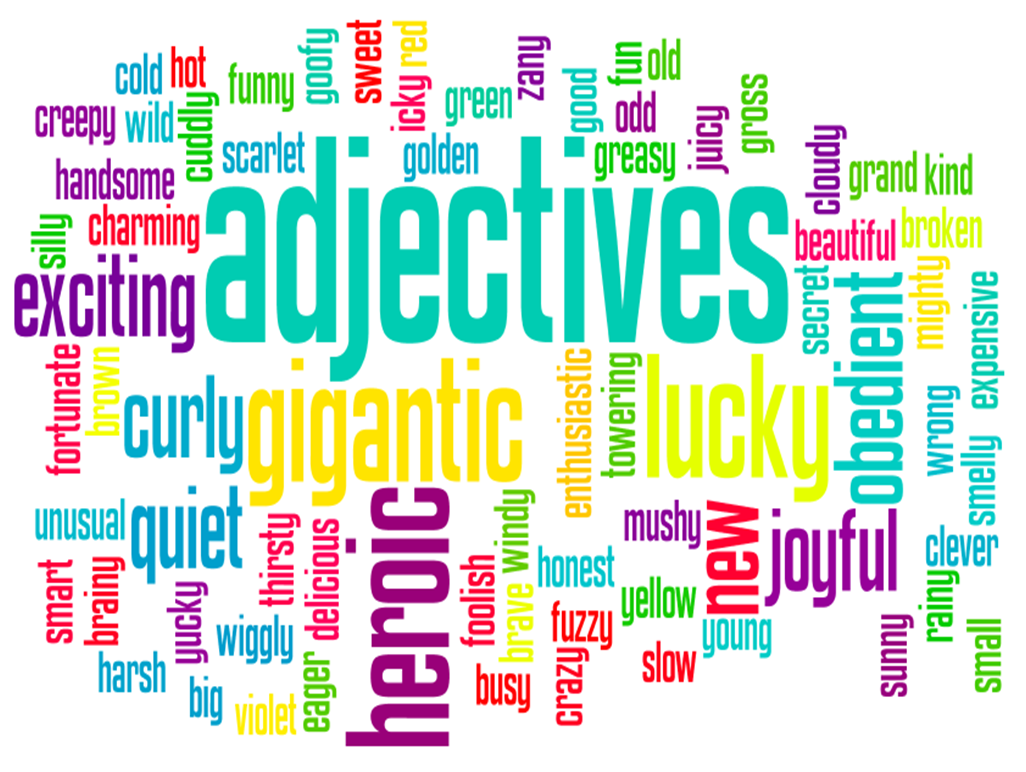
Resultado de imagen de adjectives in english picture
  • Adjectives normally go before the noun in English
    • I have a French car.
    • She has an expensive computer
    • We have a small house. 
  • Adjectives don't change for singular or plural.
    • They are very tall. He is very tall.

lunes, 19 de noviembre de 2018

REGULAR AND IRREGULAR PLURALS


REGULAR PLURALS

SINGULAR
PLURAL
SPELLING
A BOOK
A KEY
 BOOKS
KEYS
 Add –s
A WATCH
A BOX
WATCHES
BOXES
Add –es after ch, sh, s, x
A COUNTRY
A DICTIONARY
COUNTRIES
DICTIONARIES
Consonant + y > ies


  • Add -s (or -es or -ies) to make plural nouns: 
It's a pen. They're pens

  • Don't use a / an with plural nouns:
They're keys. 


IRREGULAR PLURALS


SINGULAR
PLURAL
 a man
men
a woman
women
a child
children
a person
people


Resultado de imagen de PLURAL OF WOMAN