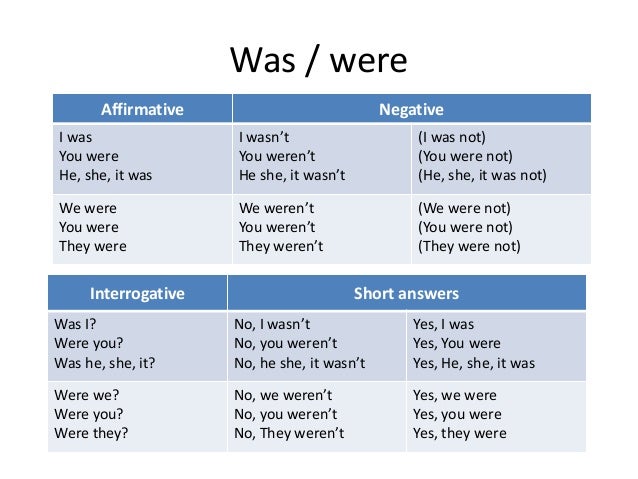
Was & were are the past forms for the verb TO BE. Check the rules for the formation of the negative and the interrogative in the table.
EXERCISE 1
| I am | working |
| You are | playing |
| He is | talking |
| She is | living |
| It is | eating |
| We are | staying |
| They are | sleeping |
I'm just leaving work. I'll be home in an hour.
Please be quiet. The children are sleeping.
What are you doing next week?Mary is going to a new school next term.
What am I doing here?Are you listening?
Are they coming to your party?
When is she going home?
She isn't going home until Monday. (or She's not going home until Monday.)I'm not doing that.
You aren't listening. (or You're not listening.)
They aren't coming to the party. (or They're not coming to the party.)
| believe dislike know like | love hate prefer realise | recognise remember suppose think (= believe) | understand want wish |
| appear feel | look seem | smell sound | taste |
| agree be | belong disagree | need owe | own possess |
I understand you. (NOT Iam understandingyou.)
This cake tastes wonderful. (NOT This cakeis tastingwonderful.)
At eight o'clock we are usually having breakfast.
When I get home the children are doing their homework.
Michael is at university. He's studying history.
I'm working in London for the next two weeks.
These days most people are using email instead of writing letters.
What sort of clothes are teenagers wearing nowadays?
What sort of music are they listening to?
The children are growing up quickly.
The climate is changing rapidly.
Your English is improving.
Note that we normally use always with this use.It's always raining in London.
They are always arguing.
George is great. He's always laughing.


